 Strata Design Journal
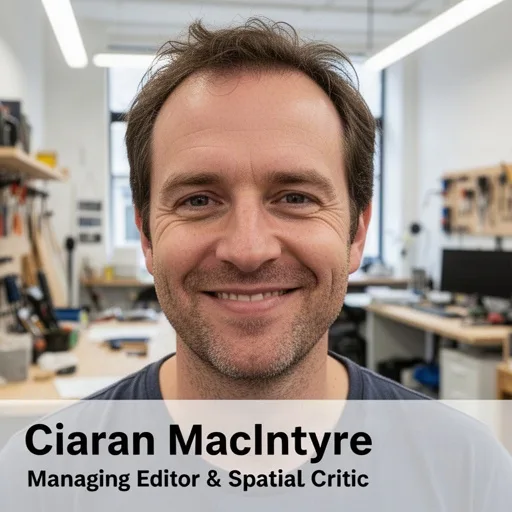
Aluminium parts require surface protection to prevent oxidation, resist abrasion, and maintain visual consistency over decades of service. Engineers and industrial designers routinely select between two dominant surface finishing methods: electrochemical anodising and electrostatic powder coating. While both finishes form a defensive shield over the underlying aluminium alloy, their bonding mechanisms, mechanical profiles, and failure modes are fundamentally different. Anodising transforms the metal surface into a hard, integrated ceramic layer, whereas powder coating applies an organic polymer shell that adheres to the metal through mechanical and chemical bonds.
Choosing the wrong surface treatment produces expensive field failures. In exterior architectural profiles, industrial machinery enclosures, and transportation components, an incorrect finish can peel, fade, pit, or seize critical tolerances within a few seasons of installation. Specifiers must balance dimensional tolerance constraints, base alloy composition, ultraviolet exposure, chemical contact, and maintenance budgets. This comparative guide evaluates the physical properties, processing realities, and international qualification standards of both finishing regimes.
The Anodic Oxidation Layer: Formation and Hardness Profiles
Anodising is an electrolytic passivation process that thickens the naturally occurring oxide film on aluminium. The part is submerged in an acid electrolyte bath, typically sulfuric acid, where it acts as the anode in an electrical circuit. Direct current passes through the bath, splitting water molecules and releasing oxygen at the component surface. This oxygen combines with the substrate aluminium to build an integrated aluminium oxide (Al2O3) lattice. Because the layer converts the base metal rather than depositing an external film, roughly 52 percent of the coating thickness penetrates into the original part dimension, while 48 percent grows outward.
The morphology of this oxide film consists of hexagonal cells oriented perpendicular to the metal surface, each containing a central micro-pore. These pores allow the electrical current to reach the metal interface as the layer grows. Once the target thickness is reached, technicians must seal the porous structure to block environmental contaminants. Sealing involves immersing the part in boiling demineralised water at 96 degrees Celsius or applying a chemical nickel acetate or cold nickel fluoride solution. The hydration process converts the amorphous aluminium oxide into boehmite, which swells and physically plugs the pore channels.
The hardness of the anodic layer depends directly on the bath temperature, acid concentration, and current density:
- Standard Architectural Anodising (Type II): Processed in a 15 to 20 percent sulfuric acid bath at roughly 18 to 21 degrees Celsius. It produces film thicknesses between 15 and 25 microns with a microhardness ranging from 220 to 340 Vickers (HV).
- Hardcoat Anodising (Type III / MIL-A-8625): Run at lower temperatures near 0 to 4 degrees Celsius with higher current densities. This creates a denser, less porous cell structure with thicknesses between 35 and 65 microns and surface hardness values between 420 and 520 HV, approaching the hardness of corundum and tool steel.
This high surface hardness gives anodised aluminium exceptional resistance to sliding abrasion, making it suitable for friction plates, internal pistons, and unlubricated sliding tracks. However, the brittle ceramic structure lacks elasticity. When the underlying metal experiences mechanical bending, heavy thermal shock, or dynamic impact, the anodic layer cannot flex. It develops microscopic fractures known as crazing, which can degrade appearance and expose microscopic pathways to the bare substrate.
Powder Coating Polymers: Polyester Versus Fluoropolymer Resins
Powder coating involves spraying dry, electrostatically charged polymer particles onto a grounded aluminium part, then baking the assembly in a convection oven at temperatures between 180 and 205 degrees Celsius. The heat causes the polymer particles to melt, flow, and chemically crosslink into a continuous barrier film. Unlike anodising, powder coating is an additive process that increases part dimensions by 60 to 110 microns per coated face. Specifiers must allocate clearance for this thickness during the initial CAD modeling stage, especially on thread engagements and tight pin joints.
The operational lifespan of a powder finish is dictated by the resin backbone chosen during formulation. Standard architectural grades rely on hydroxyl-functional polyesters crosslinked with triglycidyl isocyanurate (TGIC) or hydroxyalkylamide (HAA / TGIC-free) compounds. Superdurable polyesters incorporate higher aromatic purity and cycloaliphatic structures to resist photo-oxidation. At the upper tier of industrial coatings, fluoropolymer systems such as polyvinylidene fluoride (PVDF) and fluoroethylene vinyl ether (FEVE) provide carbon-fluorine bonds that withstand decades of severe sunlight without chemical degradation.
| Performance Attribute | Standard Polyester | Superdurable Polyester | Fluoropolymer (PVDF / FEVE) |
|---|---|---|---|
| Typical Dry Film Thickness | 60 to 80 microns | 60 to 85 microns | 70 to 110 microns |
| Pencil Hardness (ASTM D3363) | H to 2H | H to 2H | F to H |
| Gloss Retention (3 Years Florida) | Under 55 percent | 65 to 75 percent | 85 to 92 percent |
| Impact Flexibility (ISO 6272) | High (5 to 8 Nm) | High (5 to 8 Nm) | Moderate (3 to 5 Nm) |
| Color and Effect Options | Nearly unlimited | Broad industrial palette | Limited custom formulations |
The primary mechanical advantage of powder coating over anodising is flexibility. The organic polymer matrix tolerates minor substrate deformation without cracking. If a structural profile deflects under wind load or takes a localized stone impact, the paint layer stretches to maintain substrate coverage. Powder coating also offers superior aesthetic versatility, including textured surfaces, micro-metallic sheens, and gloss levels ranging from 5 percent dead matte to high-reflectance gloss.
Chloride Resistance in Coastal Urban Environments
Marine environments deliver airborne sodium chloride, fluctuating humidity, and wind-driven abrasives that aggressively target aluminium finishes. In these microclimates, anodising and powder coating deteriorate via distinct failure mechanisms.
Anodised aluminium relies on the continuous chemical integrity of its sealed oxide layer. In coastal air, salt deposits settle on the surface and mix with moisture to form a saline solution. If particulate soot from urban traffic or industrial stacks sits alongside the salt, localized galvanic and acidic concentration cells form. When ambient sulfur dioxide or nitric oxides depress the pH below 4.0, or alkaline dirt drives it above 8.5, the aluminium oxide dissolves. The breakdown appears as microscopic white pits that grow through the anodic layer to the base alloy. Sealing quality is critical: an under-sealed anodic layer placed within 3 kilometers of a coastline will often show pitting within 24 to 36 months.
Powder coatings fail along coastal corridors primarily through filiform corrosion, a worm-like tunneling that spreads underneath the paint film. This defect starts where the coating has been mechanically compromised, such as sheared cut edges, drilled fastener holes, or scratch sites. Moisture and chloride ions penetrate the defect and set up a moving differential aeration cell between the active corrosion head and the inactive tail. The corrosion product forces the paint film off the metal substrate, producing raised, branching threads that can travel several millimeters each month.
Preventing filiform corrosion requires aggressive substrate pretreatment before powder application:
- Alkaline Cleaning: Removes rolling oils and shop dirt at 50 to 60 degrees Celsius.
- Acid Etching: Strips natural surface oxides and intermetallic impurities, removing at least 1.0 gram per square meter for standard environments, or 2.0 grams per square meter for coastal projects.
- Chemical Conversion: Applies a passivating conversion layer using chrome-free titanium/zirconium chemistries, or a dedicated thin-film flash anodising primer of 3 to 6 microns before the powder application.
Repair and Maintenance Protocols for Damaged Finishes
Field repair strategies diverge sharply between these two systems. Anodising is an immersion tank process requiring chemical baths, electrical grounding, and controlled acid vats. It cannot be applied or replicated in situ on an active vitality building or assembled chassis.
When an anodised profile suffers deep scratches that penetrate to the core metal, field teams cannot rebuild the Al2O3 layer. The accepted remediation involves mechanically smoothing the scratch edges with fine abrasive pads, cleaning the bare spot with solvent, and brushing on a matching two-component aliphatic polyurethane wet paint. While this arrests atmospheric oxidation, the repaired site remains visible under changing light. The refractive index and metallic depth of an electrolytic oxide film cannot be matched by pigment particles suspended in a wet paint binder. For structural sections where visual consistency is mandatory, the only true remedy is replacing the damaged member.
Powder coating allows more reliable, visually coherent on-site repairs. Because the factory finish is a polymeric resin, it interfaces well with liquid automotive-grade coating systems. The field repair workflow proceeds through distinct actions:
- Feathering: Sand the scratch edges using 400-grit wet/dry paper, transitioning to 800-grit paper until the boundary between the exposed metal and the topcoat feels smooth to the touch.
- Solvent Wipe: Degrease the repair perimeter using isopropanol or a dedicated wax and grease remover to prevent adhesion failure.
- Primer Coat: Apply a fast-drying two-component epoxy primer over the exposed aluminium to re-establish the corrosion barrier.
- Topcoat Blending: Spray a color-matched two-component polyurethane acrylic topcoat over the primed repair, blending outward into the factory finish with a blending solvent.
Routine washing schedules prolong the working life of both treatments. In non-industrial rural settings, an annual wash with clean potable water and a mild non-abrasive detergent (pH 6.0 to 7.5) removes accumulated soil. In coastal, industrial, or high-exhaust zones, maintenance teams must wash the aluminium components every three to four months. Never use aggressive alkaline cleaners, scouring powders, or hydrochloric acid brick washes on either finish; high-alkali and strong-acid solutions quickly strip anodic layers and etch polymer resin gloss.
Certification Marks: Qualanod Standards Versus Qualicoat
Engineering drawings and specifications should avoid generic phrases like "high durability finish" and instead reference established third-party quality marks. In the aluminium finishing sector, the two global benchmarks are Qualanod for anodising and Qualicoat for powder coating. Both standards dictate chemical bath parameters, processing equipment tolerances, and mandatory batch-testing regimes.
The Qualanod specification categorises architectural finishes into distinct thickness classes based on intended service life and climate severity:
- Class 10 (10 microns): Light interior decorative use only.
- Class 15 (15 microns): Standard interior applications and benign, dry exterior environments.
- Class 20 (20 microns): Standard exterior architectural environments with moderate pollution.
- Class 25 (25 microns): Aggressive environments, including coastal strips, marine platforms, and high-density industrial areas.
Qualanod certification requires verification that the anodic pores are correctly closed. Laboratories assess sealing quality through an admittance test (measuring electrical conductivity across the barrier layer under ISO 2931) and a destructive dye-spot absorption test (ISO 2143). An improperly sealed component will fail these tests immediately, alerting the fabricator to electrolyte contamination or depleted sealing additives.
The Qualicoat specification governs organic powder coatings applied to architectural aluminium. Rather than focusing solely on film thickness, Qualicoat classifies systems by their capacity to retain gloss and resist color shifts under natural outdoor exposure:
- Class 1: Uses standard polyester resins. Requires one year of continuous exposure at testing grounds in South Florida, demanding at least 50 percent gloss retention at the conclusion of the test.
- Class 2 (Superdurable): Requires three years of Florida testing, with at least 50 percent gloss retention after year three and minimum 70 percent gloss retention after year two.
- Class 3 (Fluoropolymers): Requires ten years of Florida testing, with at least 50 percent gloss retention after the full decade.
For installations situated within 5 kilometers of salt water, specifiers should mandate the Qualicoat Seaside endorsement. This certification requires dual-step etching (alkaline followed by acid) with an aggregate metal removal rate of at least 2.0 grams per square meter to eliminate surface trace intermetallics that trigger filiform creep.
Common Mistakes in Finish Selection
Fabrication shops and engineering teams frequently encounter component rejections caused by finish mismatches. Reviewing past field errors highlights three recurring failure modes:
- Ignoring Base Alloy Metallurgy: Anodising highlights the underlying grain structure and metallurgical defects of the raw aluminium. Alloys with high copper or silicon content, such as 2024, 7075, or die-cast A380, produce muddy, gray, or uneven yellowish anodic finishes with inferior corrosion resistance. High-aesthetic anodising demands extrusion alloys like 6063 or sheet alloys like 5005. Conversely, powder coating covers metallurgical inconsistencies and cast porosity cleanly, making it the superior selection for multi-alloy assemblies or cast housings.
- Failing to Account for Part Thickness Growth: Drawing callouts that specify close-tolerance hole diameters, thread depths, or sliding keyed slots often omit coating allowances. Applying a 90-micron powder coating layer to internal corners or inside bore holes reduces clearances significantly, causing binding during mechanical assembly. For precision assemblies, either choose Type II anodising with predictable dimensional shifts or establish strict masking callouts on production drawings.
- Overlooking Thermal Expansion Differentials: Aluminium exhibits a high coefficient of thermal expansion (roughly 23 x 10^-6 per Kelvin). In settings with wide diurnal temperature swings, thick brittle anodic coatings can develop tension-induced crazing over large, uninsulated panels. Powder coatings, with an organic resin matrix that flexes under thermal movement, accommodate this substrate strain without surface cracking.
Selecting and Specifying the Right Finish
To determine the appropriate finish for a given component, apply the following systematic evaluation sequence:
Audit the Mechanical Environment
Assess whether the part experiences continuous surface friction, sliding contact, or needs electrical grounding. If hardness, pencil-scratch resistance, or heat dissipation takes precedence, specify hardcoat anodising (MIL-A-8625 Type III or Qualanod Class 25). If the assembly requires post-coating bending, flexural compliance, or high impact resistance, specify an organic powder system.
Audit the Chemical and Atmospheric Exposure
Pinpoint the installation geography. For components exposed to splash zones, industrial acidic gases, or deicing chemicals, evaluate the local pH extremes. If ambient exposures fall outside the pH 4.0 to 8.5 range, avoid anodising. Instead, select a Qualicoat Class 2 superdurable or Class 3 fluoropolymer powder applied over a robust pre-anodised or zirconium conversion base.
Finalise the Drawing Callout
Draft complete specifications that remove ambiguity for the finishing coater. Avoid simply writing "powder coat" or "anodised finish." State the exact standard, class, target thickness, masking boundaries, and inspection tests directly on the part drawing.
Example Anodising Callout: Finish to Qualanod Class 25, natural matte etch (E6), sealed, minimum film thickness 25 microns, zero admittance over 20 microsiemens (ISO 2931).
Example Powder Coating Callout: Finish to Qualicoat Class 2 (Superdurable), Qualicoat Seaside pretreatment (minimum etch 2.0 g/m²), dry film thickness 60 to 80 microns, gloss level 30 percent, color code RAL 7016.
Where structural integrity or safety-critical components are involved, consult a qualified metallurgical engineer or finishing specialist to evaluate the joint action of alloy selection, heat treat temper, and finishing chemistry before releasing production toolpaths.